
Inscribed stone, clay, and papyrus from the ancient Near East preserve the world in which the biblical texts were written. The artifacts below, grouped by region and type, include creation and flood traditions, royal annals that name kings of Israel and Judah, everyday archives, and the earliest Hebrew inscriptions. Each entry gives a brief description of the object and its main point of contact with the biblical text.
Sections: Mesopotamian Myth, Lament & Wisdom · Mesopotamian Royal & Historical Records · Archives & Everyday Documents · Egyptian Texts & Monuments · Hebrew, Moabite & Aramaic Inscriptions · The Dead Sea Scrolls
Mesopotamian Myth, Lament & Wisdom
The Sumerian King List
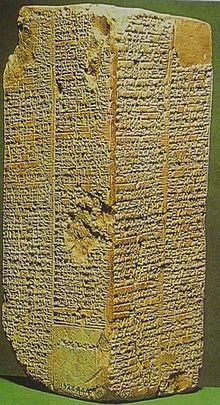
A clay prism (the Weld-Blundell Prism, Ashmolean Museum, c. 1800 BC) listing the kings of Sumer from the time “kingship descended from heaven.” Rulers before the Flood are assigned reigns of tens of thousands of years, and much shorter reigns follow it. This structure is often compared with the long-lived pre-Flood generations of Genesis 5 and the declining lifespans of Genesis 11.
The Atrahasis Epic
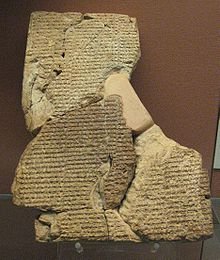
Old Babylonian Akkadian tablets (c. 1700 BC) telling how the gods created humanity from clay mixed with divine blood, then sent plague, famine, and finally a flood. The god Enki warns the hero Atrahasis to build a boat. The epic’s sequence of creation, human multiplication, and flood closely parallels the outline of Genesis 1–9.
Epic of Gilgamesh, Tablet XI (the “Flood Tablet”)
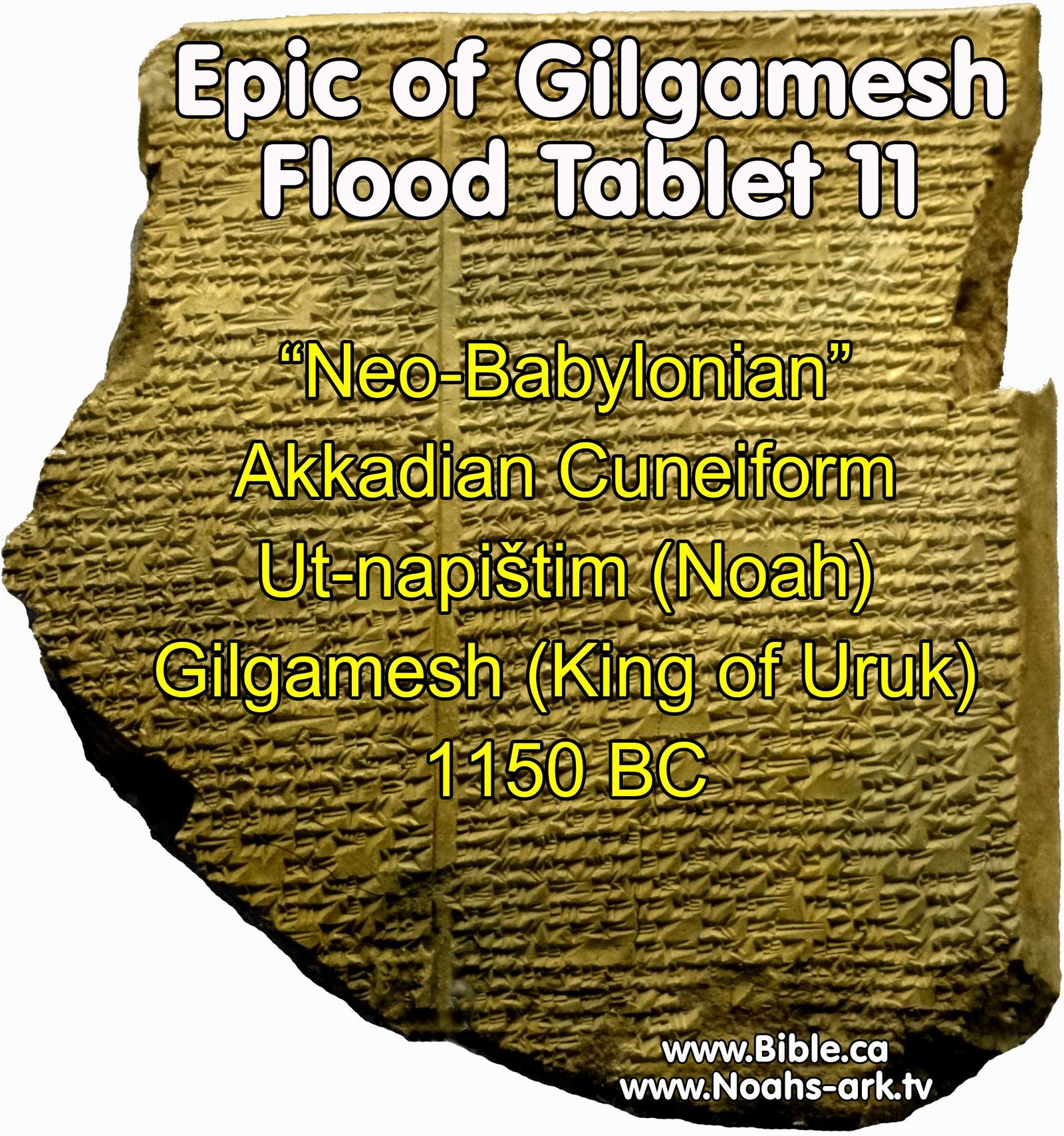
The eleventh tablet of the Standard Babylonian Gilgamesh epic, a 7th-century BC copy from the library of Ashurbanipal at Nineveh (British Museum). The Standard version itself is traditionally dated to around 1150 BC, the date given in the image caption. Utnapishtim tells Gilgamesh how he survived the Flood in a sealed boat, landed on a mountain, and released a dove, a swallow, and a raven. These details closely parallel Genesis 6–8.
Enuma Elish (Babylonian Creation Epic)
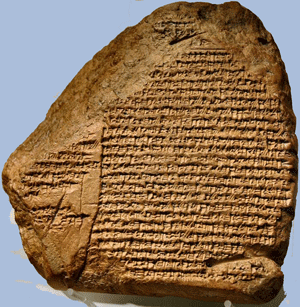
A seven-tablet Akkadian creation epic in which Marduk defeats the sea-goddess Tiamat and divides her body to form the heavens and the earth. Scholars compare its watery chaos with the “deep” (tehom) of Genesis 1:2. They also note the sharp contrast with Genesis, where creation comes by divine word rather than by combat.
Ludlul Bēl Nēmeqi (“I Will Praise the Lord of Wisdom”)
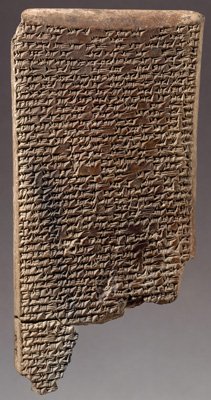
A Babylonian poem of the Kassite period (c. 1300–1100 BC) in which a righteous noble, Shubshi-meshre-Shakkan, describes unexplained suffering, abandonment by friends, and eventual restoration by Marduk. It is often called the “Babylonian Job” and is a key comparison text for the book of Job.
The Lament for Ur
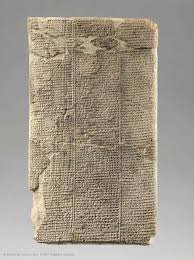
A Sumerian city lament (c. 2000 BC) mourning the destruction of Ur by the Elamites at the end of the Third Dynasty of Ur. Its mournful description of a ruined city abandoned by its deity is the classic Mesopotamian parallel to the biblical book of Lamentations.
Cylinder Seal Impression of the Winged Ishtar
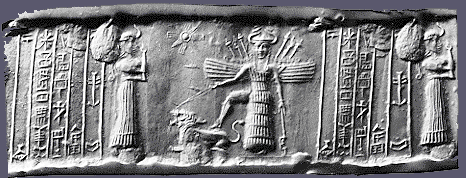
A modern impression of a Mesopotamian cylinder seal showing the goddess Ishtar (Sumerian Inanna), winged and armed, with her foot on a lion and flanked by worshippers and a cuneiform inscription. Ishtar’s cult as “Queen of Heaven” is likely the background of Jeremiah 7:18 and 44:17–19.
Mesopotamian Royal & Historical Records
The Stele of the Vultures
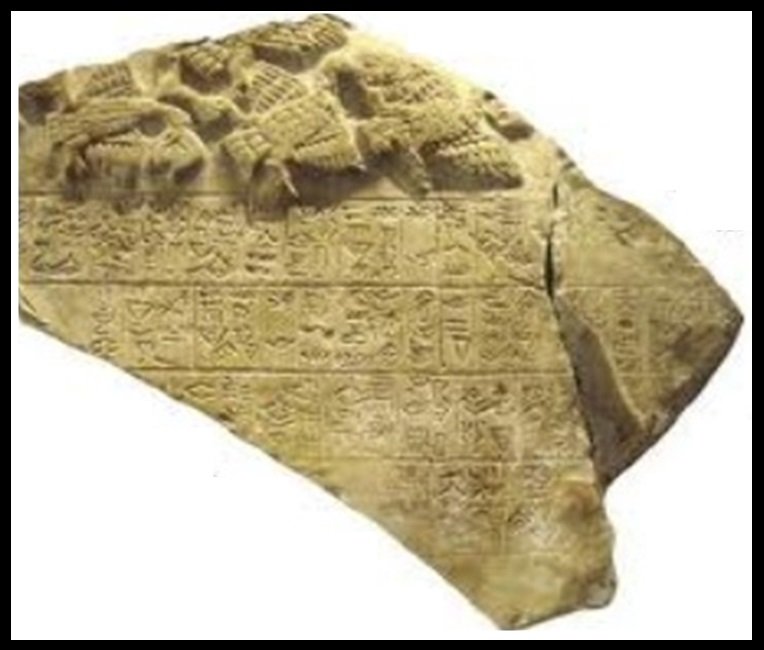
A limestone fragment (Louvre, c. 2450 BC) commemorating the victory of Eannatum of Lagash over the neighboring city of Umma. Vultures carry off the heads of the slain at the top, and archaic cuneiform fills the registers below. It is one of the earliest known historical monuments to record a border war and its treaty oath.
The Legend of Sargon of Akkad
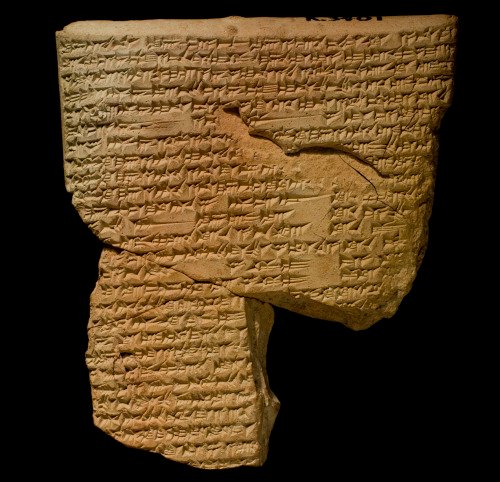
A Neo-Assyrian tablet preserving the birth legend of Sargon of Akkad (reigned c. 2334–2279 BC). His mother places him in a reed basket sealed with bitumen and sets him on the Euphrates, where he is rescued and raised. The motif is frequently compared with the infancy of Moses in Exodus 2:1–10.
The Code of Hammurabi
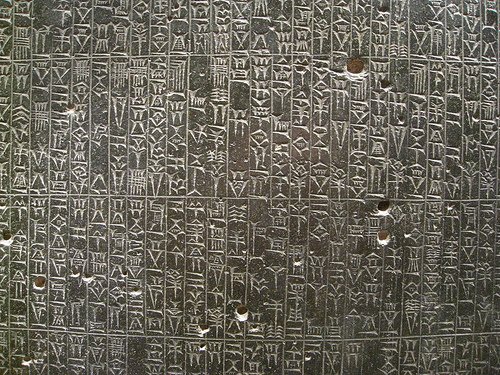
A close-up of the inscribed basalt stele of Hammurabi of Babylon (Louvre, c. 1754 BC), which contains about 282 case laws. Many provisions, such as the goring ox, bodily injury, and the principle of “an eye for an eye,” closely parallel the Covenant Code of Exodus 21–23.
Black Obelisk of Shalmaneser III — Jehu Panel
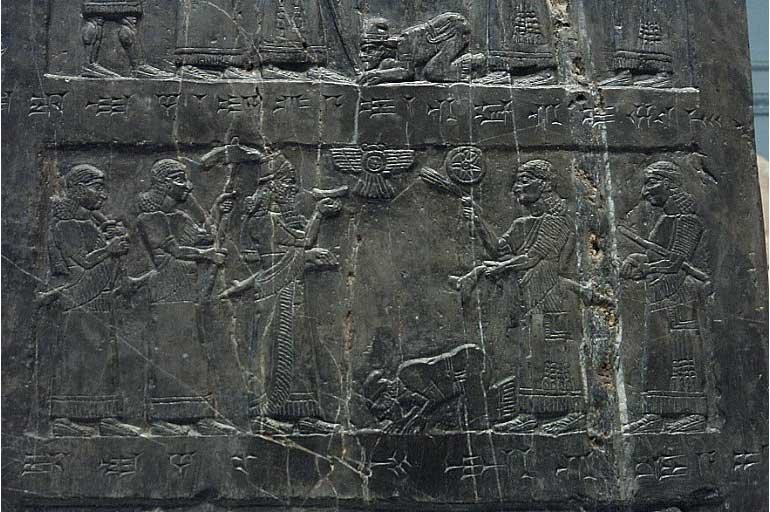
A detail of the Black Obelisk (British Museum, c. 841 BC) showing an Israelite king, or his envoy, bowing before the Assyrian king. The caption names “Jehu son of Omri” and lists his tribute. It is the only known contemporary depiction of an Israelite king (compare 2 Kings 9–10).
Building Inscription of Nebuchadnezzar II
A close-up of a clay cylinder inscription of Nebuchadnezzar II (605–562 BC), one of many recording his rebuilding of Babylon’s walls, temples, and palaces. These royal boasts form the background of Daniel 4:30: “Is not this the great Babylon I have built…?”
Jehoiachin Ration Tablet
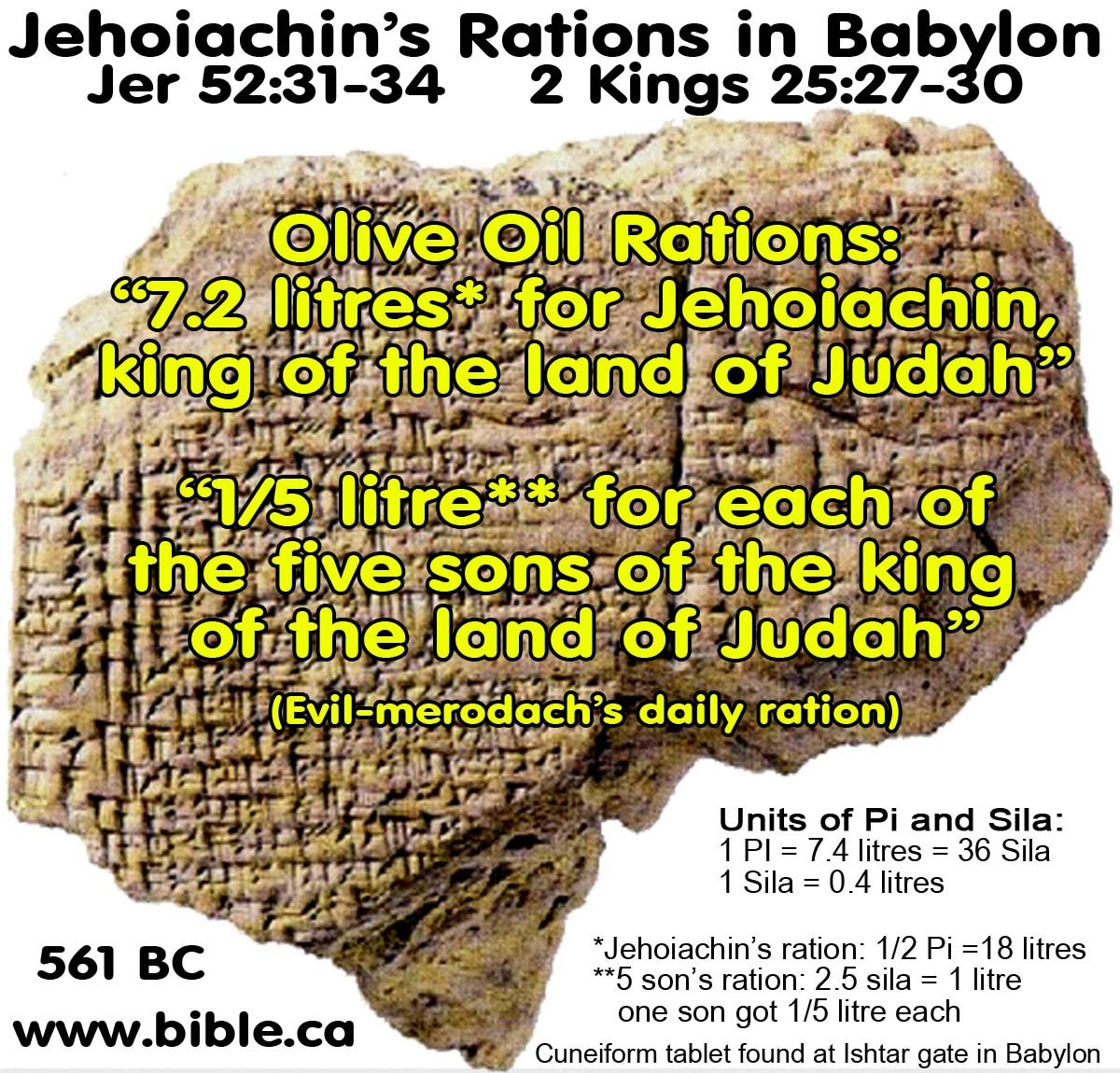
One of the Babylonian administrative tablets found near the Ishtar Gate (Vorderasiatisches Museum, Berlin). It records oil rations for “Jehoiachin, king of the land of Judah” and his five sons. The tablets date to about 592 BC, during his captivity, so they predate the 561 BC release by Evil-Merodach mentioned in the image caption. Compare 2 Kings 25:27–30 and Jeremiah 52:31–34.
The Nabonidus Chronicle
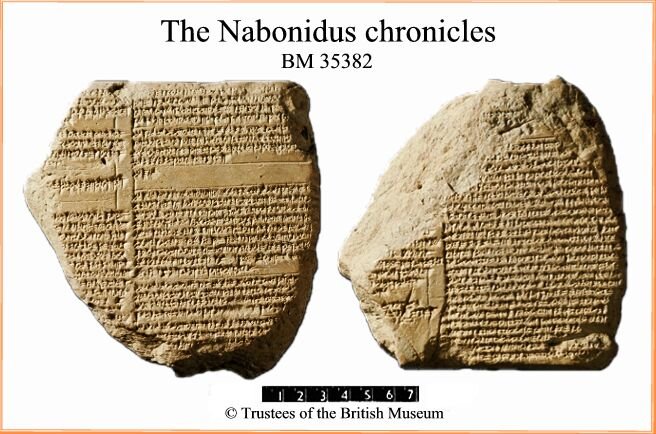
A Babylonian chronicle tablet (BM 35382) recording the reign of Nabonidus. While Nabonidus was away at Tayma, the crown prince (Belshazzar) ruled in Babylon, and the chronicle records the city’s fall to Cyrus in 539 BC. It explains why Belshazzar could offer Daniel only the “third” place in the kingdom (Daniel 5:7, 16, 29).
The Cyrus Cylinder
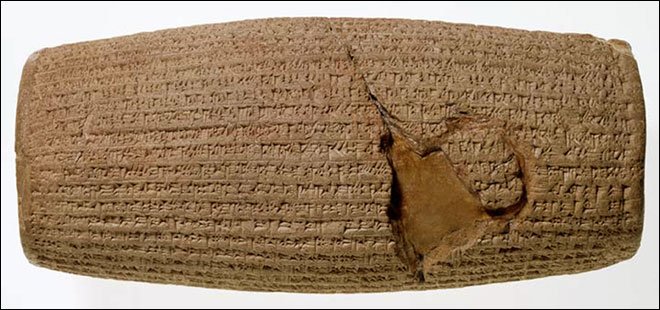
A clay cylinder (British Museum, 539 BC) in which Cyrus the Great describes his conquest of Babylon and his policy of returning displaced peoples and restoring their sanctuaries. That policy matches the decree allowing the Jews to return and rebuild the temple (Ezra 1:1–4; Isaiah 44:28–45:1).
Archives & Everyday Documents
The Ebla Tablets
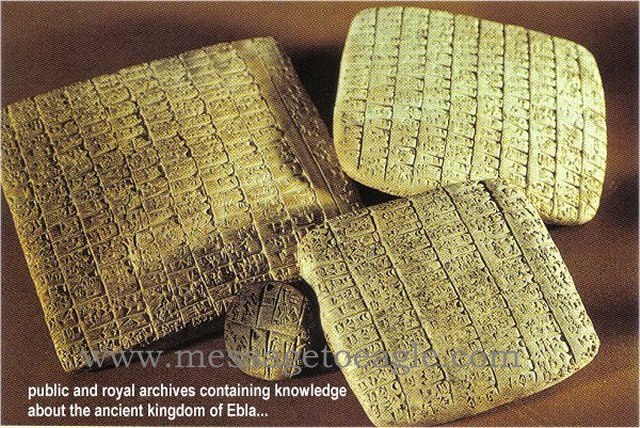
Clay tablets from the royal archives of Ebla (Tell Mardikh, Syria, c. 2400–2300 BC), some 17,000 tablets and fragments in Sumerian and Eblaite, an early Semitic language. They document administration, trade, and diplomacy in third-millennium Syria. Early claims of direct biblical references have not held up, but the archive remains vital for early Semitic language and culture.
Tablet from Mari
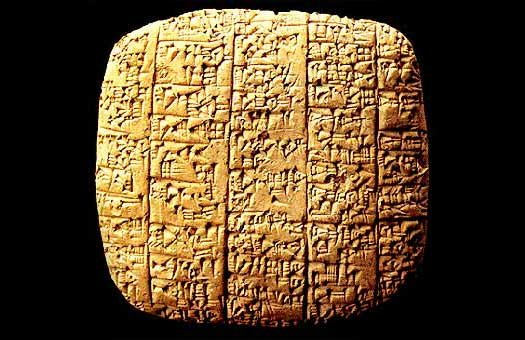
A cuneiform tablet from the palace archive of Mari (Tell Hariri, Syria, 18th century BC), which holds roughly 25,000 texts. The letters describe tribal pastoralists and prophetic messengers who spoke in a god’s name. They provide important comparative material for the patriarchal narratives and for Israelite prophecy.
Nuzi Tablets
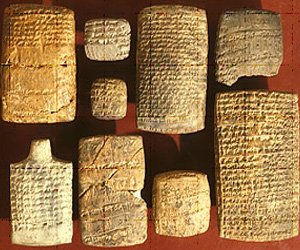
Inscribed clay tablets from Nuzi near modern Kirkuk (Harvard Semitic Museum, 15th–14th century BC) recording Hurrian family law on adoption, inheritance, marriage, and household gods. They were once cited as close parallels to customs in Genesis, such as Rachel and the teraphim in Genesis 31. Later scholars (e.g., T. L. Thompson, J. Van Seters) have shown that many of those parallels are overstated.
The Amarna Letters
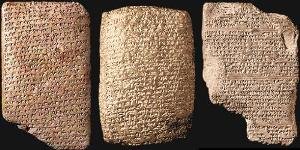
Clay tablets in Akkadian cuneiform (14th century BC) from the diplomatic archive of Amenhotep III and Akhenaten at Tell el-Amarna. Several are from Canaanite city rulers, including Abdi-Heba of Jerusalem, who complain about the disruptive ʿApiru. They give a vivid picture of Canaan just before Israel’s emergence.
Ugaritic Tablets
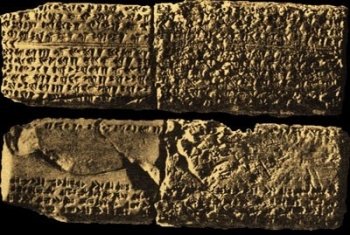
Tablets from Ras Shamra (ancient Ugarit, Syria, 14th–13th century BC), written in an alphabetic cuneiform script in a Northwest Semitic language closely related to Hebrew. They preserve the Baal Cycle and other texts naming El, Baal, Asherah, and the sea-monster Lotan (compare Leviathan). Ugaritic has transformed the study of Hebrew poetry, vocabulary, and Canaanite religion.
The Murashu Archive
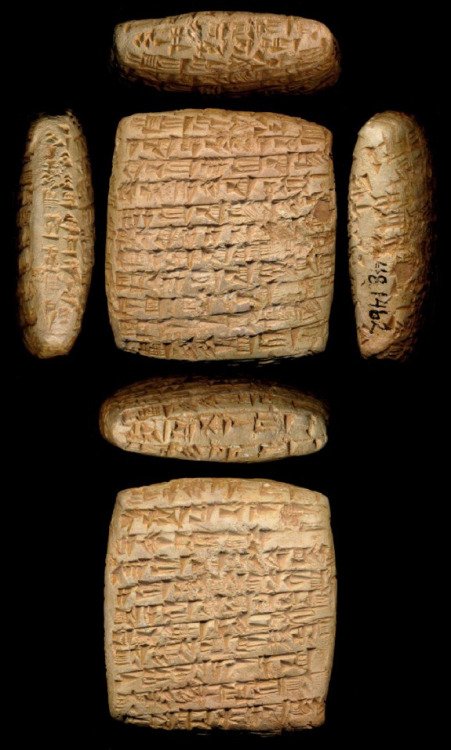
Business tablets of the Murashu family firm at Nippur (5th century BC, Persian period). Among their clients are many people with Judean and Yahwistic names, which offers direct evidence of the Jewish community that remained in Babylonia after the exile (compare Ezra–Nehemiah and Esther).
Elephantine Temple Petition
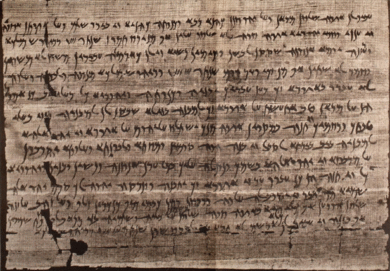
An Aramaic papyrus (407 BC) from the Jewish military colony at Elephantine in Egypt. It asks Bagavahya, governor of Judah, for permission to rebuild the community’s temple of YHW, which had been destroyed. It mentions the high priest Johanan and the sons of Sanballat (compare Nehemiah 2:10; 12:22).
Egyptian Texts & Monuments
The Story of Sinuhe
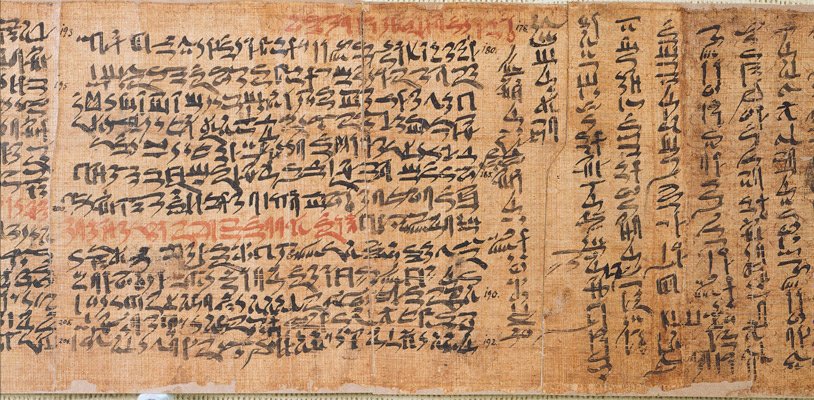
A Middle Kingdom tale (c. 1900 BC) preserved in hieratic papyri. An Egyptian courtier flees to Retjenu (Syria–Canaan), prospers among its people, and returns home in old age. Its description of a land rich in figs, grapes, honey, and olives recalls the biblical portrait of Canaan.
Relief of Amun’s Barque Shrine (Hatshepsut, Karnak)
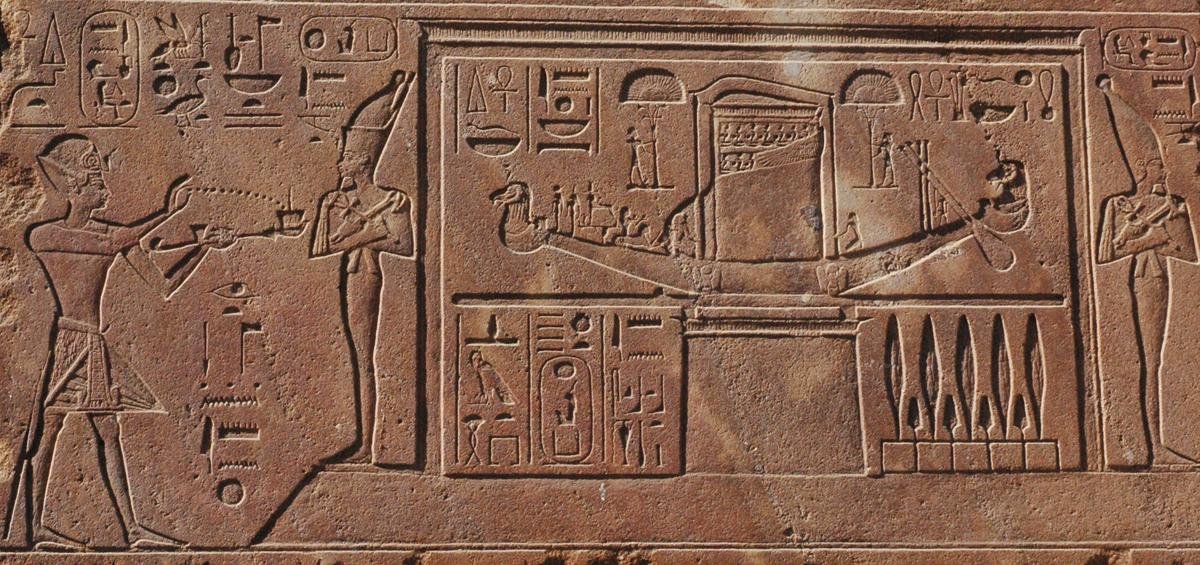
A carved quartzite relief from Hatshepsut’s monuments at Karnak (c. 1470 BC) showing the ruler offering before the sacred barque of Amun resting in its way-station shrine. Portable shrines like this are often compared with the carrying of the Ark of the Covenant on poles.
Dream Stele of Thutmose IV
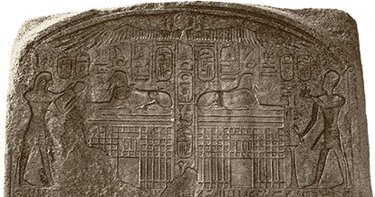
A granite stele between the paws of the Great Sphinx at Giza (c. 1401 BC). Thutmose IV records a dream in which the Sphinx promised him the throne if he cleared away the sand burying it. Because Thutmose may not have been the eldest son, the stele is sometimes cited in debates over the date of the Exodus.
Stela of Akhenaten and Nefertiti
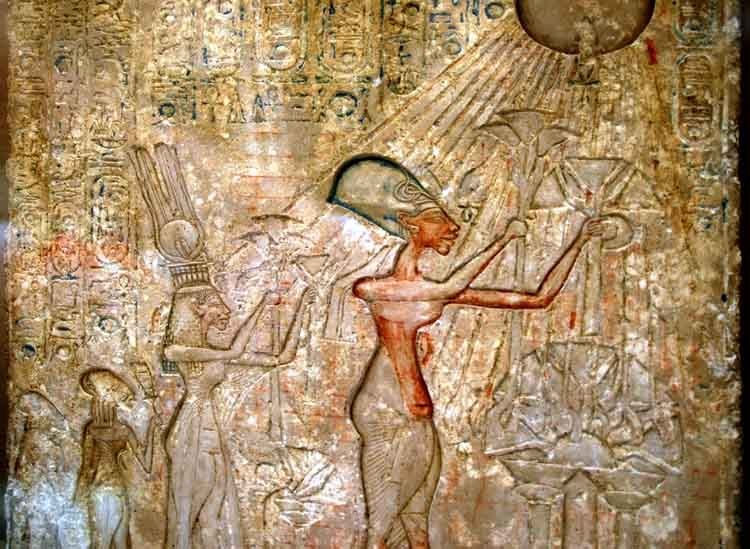
A relief from the Amarna period (c. 1350 BC) showing Akhenaten and Nefertiti worshipping the Aten, the sun disk whose rays end in hands. Akhenaten’s near-monotheistic Aten cult, and especially the Great Hymn to the Aten, are often compared with Psalm 104.
The Merneptah Stele
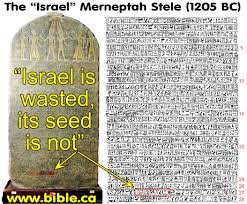
A granite victory stele of Pharaoh Merneptah (Egyptian Museum, Cairo, c. 1208 BC). Its closing lines declare “Israel is laid waste, its seed is not.” This is the earliest known reference to Israel outside the Bible, and its use of the determinative for a people places Israel in Canaan by the late 13th century BC.
The Tale of Two Brothers
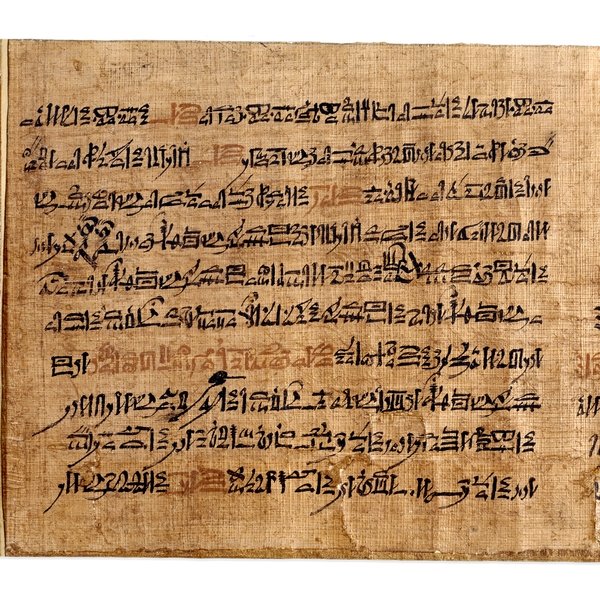
A New Kingdom papyrus (Papyrus D’Orbiney, British Museum, c. 1200 BC). An elder brother’s wife tries to seduce the younger brother, Bata, then falsely accuses him when he refuses. The episode is the classic Egyptian parallel to Joseph and Potiphar’s wife (Genesis 39).
The Instruction of Amenemope
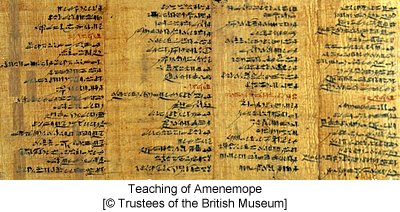
An Egyptian wisdom text in thirty chapters (British Museum papyrus EA 10474, composed in the Ramesside period). Its sayings closely match Proverbs 22:17–24:22, which refers to “thirty sayings” (Proverbs 22:20). It is the clearest case of Egyptian influence on biblical wisdom literature.
Amun’s Sacred Barque — Background to the Report of Wenamun
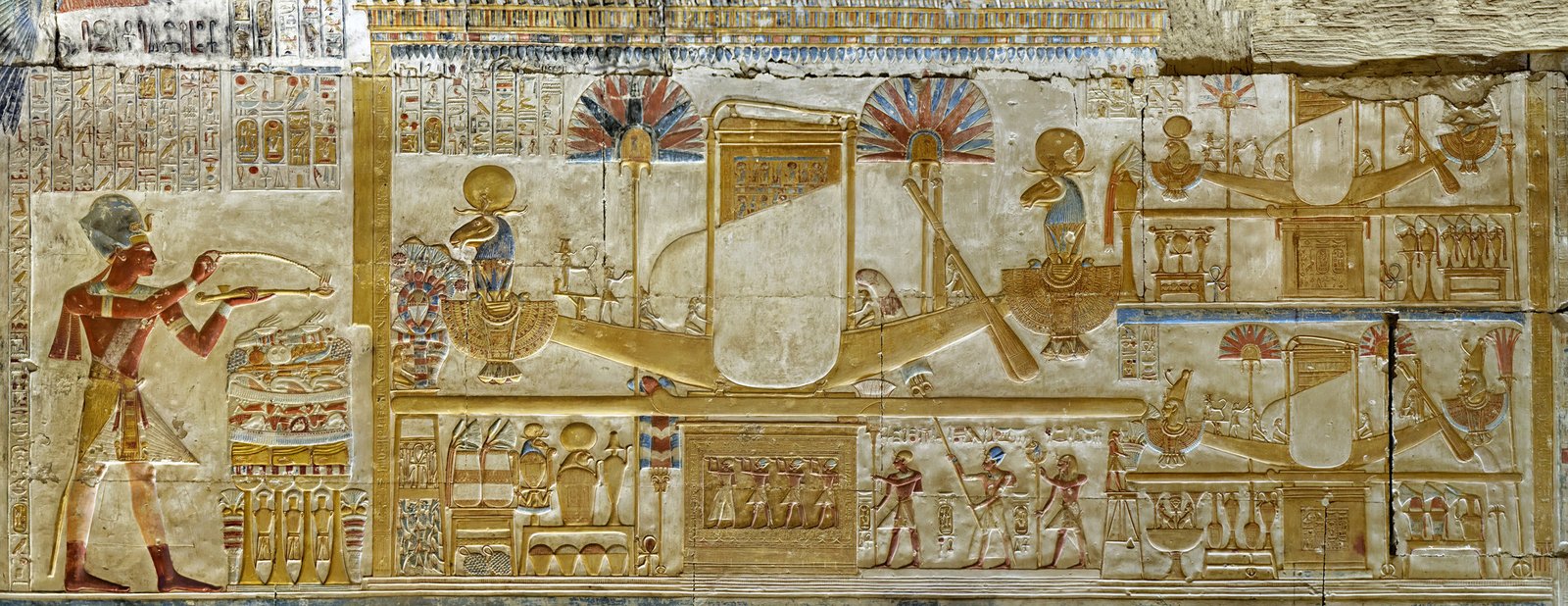
A temple relief of the sacred river barque of Amun. In the Report of Wenamun (c. 1075 BC), an Egyptian envoy travels to Byblos to buy cedar for this barque, is robbed at Dor, and witnesses an ecstatic prophet at the Byblian court. The tale illuminates Phoenician trade and prophecy (compare 1 Kings 5).
Shishak’s (Sheshonq I) Campaign Relief at Karnak
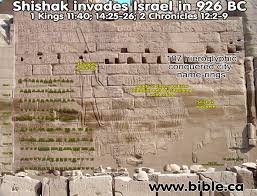
The Bubastite Portal relief at Karnak (c. 925 BC) listing towns conquered by Pharaoh Sheshonq I in Israel and Judah, each in a name ring. It corresponds to Shishak’s invasion in the fifth year of Rehoboam (1 Kings 14:25–26; 2 Chronicles 12:2–9).
Hebrew, Moabite & Aramaic Inscriptions
The Gezer Calendar
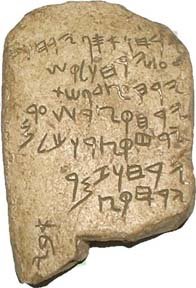
A small limestone tablet (10th century BC, Istanbul Archaeology Museums) listing the agricultural year by tasks: olive harvest, sowing, flax, barley, wheat, pruning, and summer fruit. It is one of the oldest known Hebrew (or Phoenician-Hebrew) inscriptions.
The Mesha Stele (Moabite Stone)
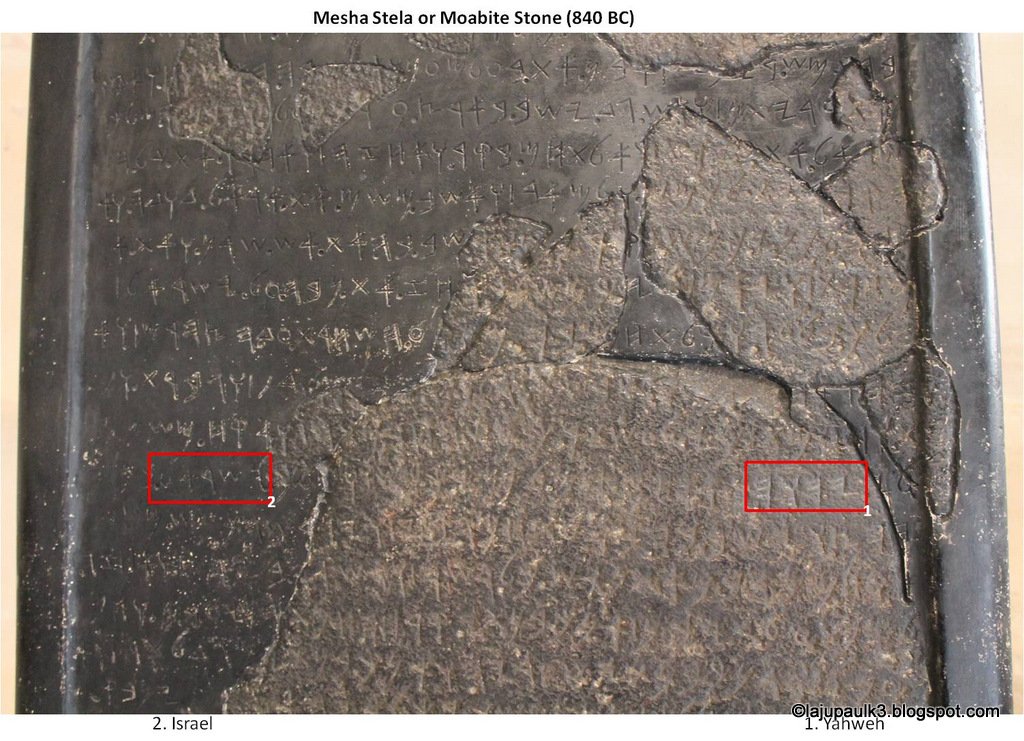
A basalt stele (Louvre, c. 840 BC) in which Mesha, king of Moab, celebrates his revolt against Israel after the reign of Omri’s son. The highlighted boxes mark the names “Israel” and “YHWH,” the earliest known extrabiblical mention of the divine name. Compare 2 Kings 3.
The Siloam Inscription
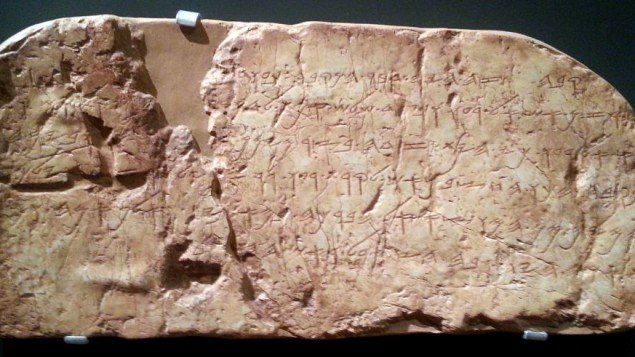
A Hebrew inscription (c. 700 BC, Istanbul Archaeology Museums) carved in Hezekiah’s tunnel in Jerusalem. It describes the moment the two teams of diggers, tunneling from opposite ends, met. It confirms the account of Hezekiah’s water tunnel (2 Kings 20:20; 2 Chronicles 32:30).
The Lachish Letters (Replicas)
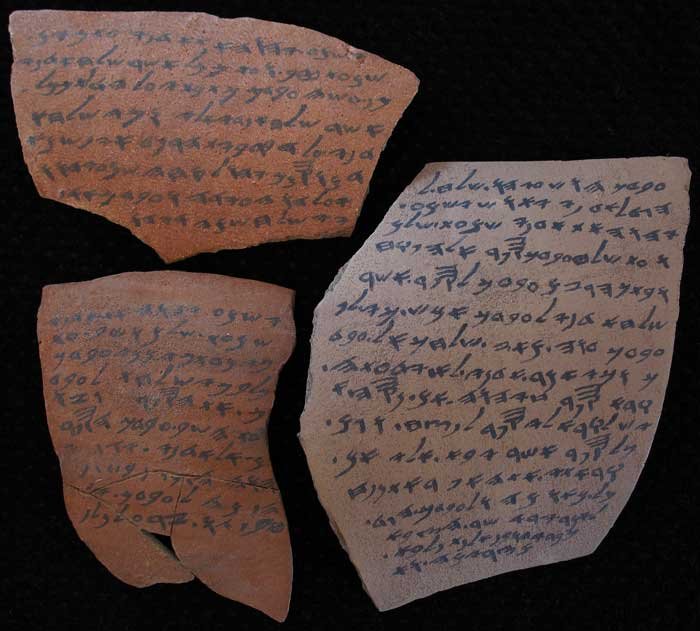
Replicas of inscribed pottery sherds from Lachish (c. 588 BC), military letters written in ink during the Babylonian advance on Judah. Letter 4 reports that the signal fires of Azekah can no longer be seen, which echoes Jeremiah 34:7, where Lachish and Azekah are the last fortified cities remaining.
The Dead Sea Scrolls
The Dead Sea Scrolls
Manuscripts found between 1947 and 1956 in caves near Qumran (c. 250 BC – AD 68), including the oldest surviving copies of nearly every book of the Hebrew Bible. Scrolls such as the Great Isaiah Scroll (1QIsaa) allow direct comparison with the Masoretic Text and the Septuagint, and they reveal both the remarkable stability of the text and real textual variation in the Second Temple period.
Images are shown for educational and research purposes. Dates follow standard scholarly chronology and are approximate.